Cup Journeys Reshape Survival Prospects for Teams in Domestic and European Ties
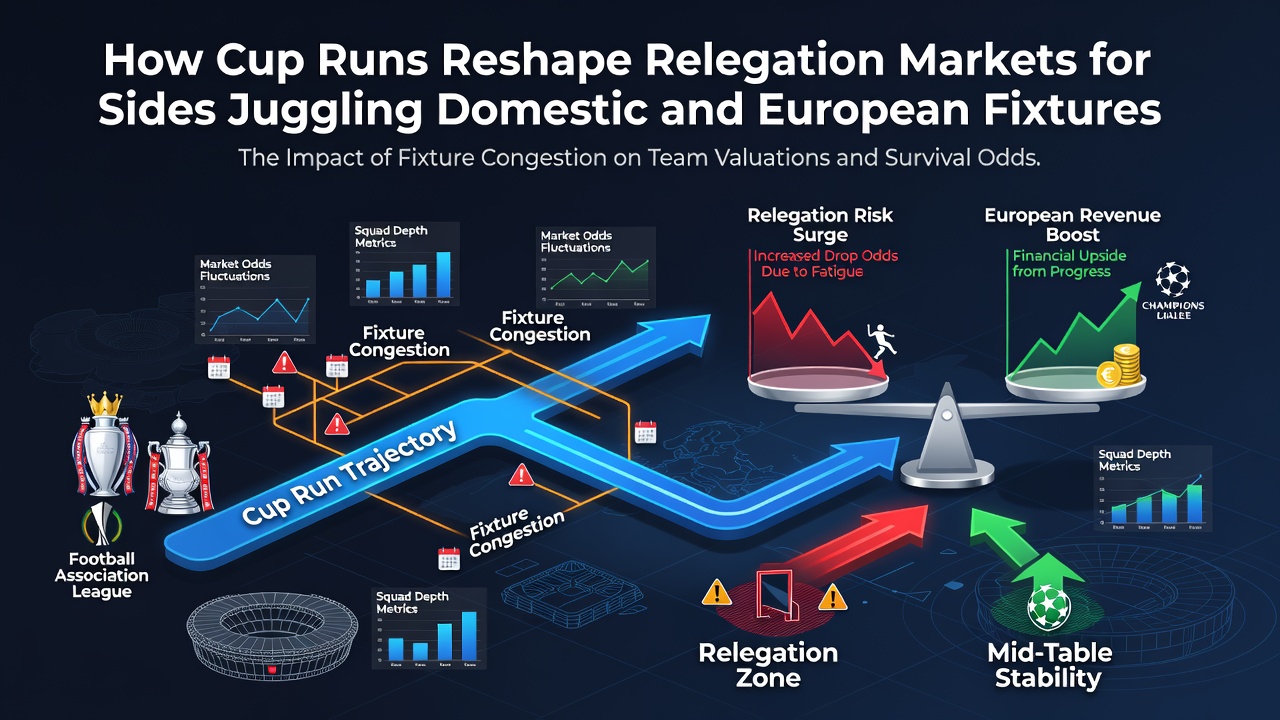
Teams that advance far in domestic cups or European competitions often face fixture pile-ups that force squad rotation and recovery management, which in turn alters their league results and the associated relegation betting markets. Data from recent seasons shows that clubs with extra midweek fixtures record higher rates of dropped points in league play, prompting bookmakers to adjust odds on survival as the campaign progresses. Observers note that these adjustments reflect patterns where fatigue accumulates and key players miss matches due to injury or rest, rather than any single decisive factor.
Fixture Congestion Patterns Emerge Early
Clubs entering European group stages or reaching later rounds of national cups encounter schedules that expand rapidly after the winter break, with some sides playing three matches in eight days during March and April. Researchers tracking performance metrics across Europe's top leagues have documented drops in distance covered and sprint frequency during congested periods, and those declines correlate with increased goals conceded. In July 2026 pre-season planning, several clubs already identified these risks when mapping out potential cup paths alongside league targets, leading to early decisions on squad depth investments.
Betting markets respond to these developments by widening margins on relegation candidates who secure unexpected cup progress, since the added games create uncertainty around consistent league form. One study of mid-table sides from the 2024-25 campaign found that teams reaching European knockout stages saw their implied relegation probabilities rise by an average of 12 percentage points once extra fixtures were confirmed.
Squad Rotation and Injury Data Influence Markets
Medical and performance staff at clubs juggling competitions track muscle injury rates that climb when players log more than 50 matches per season, with figures from sports science groups indicating a 30 percent increase in soft-tissue issues during such stretches. Those who study these trends point to examples where sides rested star players ahead of European ties only to suffer league defeats that shifted relegation odds sharply in the opposite direction. Bookmakers incorporate these variables into live markets, adjusting spreads after each cup result because the downstream effects on league fixtures become clearer.

Analysts reviewing historical data note that clubs with thinner squads experience sharper market swings, while those with stronger benches maintain steadier league positions even after deep cup runs. A report issued by the European Club Association highlighted how financial disparities between leagues affect the ability to absorb fixture overload, with data drawn from multiple member associations showing varied outcomes based on squad investment levels.
Market Reactions and Betting Adjustments
Relegation markets typically price in cup progress as a negative for lower-placed teams because the probability of points loss rises with each additional fixture. According to research published by the University of Groningen's sports analytics group, sides that reach the quarter-finals of major cups while also competing in Europe finish an average of four places lower in their domestic leagues than comparable teams without such runs. This pattern prompts odds compilers to lengthen prices on survival for those clubs once cup draws are set, although results on the pitch can reverse those shifts within a few matchweeks.
External factors such as travel distances for European away games add further variables that betting operators monitor through satellite data and fixture calendars. Teams based in northern Europe face longer journeys to group stage venues in southern or eastern regions, and recovery windows shrink accordingly. Figures released by Sports Medicine Australia on similar scheduling challenges in other sports underscore how cumulative travel fatigue compounds the effects of dense fixture lists.
Conclusion
Clubs that navigate extended cup campaigns while fighting relegation demonstrate measurable changes in league performance metrics, and these changes feed directly into betting market recalibrations. Data compiled across multiple seasons indicates that fixture density, rather than motivation alone, drives the observed outcomes. As the 2025-26 campaign moves toward its later stages, markets continue to reflect the interplay between cup involvement and domestic survival prospects through ongoing odds adjustments tied to verified performance indicators.